
Quang Hai Out, Hoang Duc Alone: Vietnam's Real Midfield Gap at the FIFA ASEAN Cup
core_answer: Với việc Quang Hải chấn thương mắt cá trái và rút khỏi FIFA ASEAN Cup 2026, HLV Kim Sang Sik nhiều khả năng giữ mô hình một tiền vệ điều phối sâu là Nguyễn Hoàng Đức, còn suất đá cặp thuộc về Lê Phạm Thành Long hoặc Võ Hoàng Minh Khoa. Không phương án nào tái tạo đầy đủ vai trò chia tải mà Quang Hải đảm nhận ở quãng cuối trận.
key_facts: Nguyễn Quang Hải chấn thương mắt cá trái, rút khỏi FIFA ASEAN Cup 2026 sát ngày khai cuộc 24 và 25 tháng 9.; Thể thức chỉ cho đội nhất mỗi bảng vào chung kết ngày 5 tháng 10; Việt Nam chung bảng với Thái Lan, Philippines và Pakistan.; Nguyễn Hoàng Đức được cho là tập riêng; Liên đoàn Bóng đá Việt Nam chưa xác nhận thông tin này.; Võ Hoàng Minh Khoa, 25 tuổi, cao 1m76, thuộc Becamex TP.HCM, là phương án dự phòng được HLV Kim Sang Sik lựa chọn.; Một hãng tin khu vực nêu tối đa chín ca vắng mặt của tuyển Việt Nam; con số này chưa được kiểm chứng độc lập.
source_attribution: Nguồn: tổng hợp từ báo chí khu vực (dẫn lại CNN Indonesia), phát ngôn của ông Dương Vũ Lâm và HLV Hoàng Anh Tuấn; thể thức, ngày thi đấu và số ca vắng mặt chưa có văn bản chính thức từ FIFA, AFF hoặc VFF.
related_qa: question: Ai thay Quang Hải đá cặp tiền vệ với Hoàng Đức?, answer: HLV Kim Sang Sik nghiêng về Võ Hoàng Minh Khoa của Becamex TP.HCM, với Lê Phạm Thành Long của CAHN là phương án thay thế.; question: Vì sao ghế dự bị của Quang Hải lại quan trọng với tuyến giữa Việt Nam?, answer: Vai trò vào sân phút 65 đến 70 của Quang Hải là cơ chế chia tải cho Hoàng Đức, giúp tuyến giữa thoát pressing ở giai đoạn cuối trận.; question: Thể thức FIFA ASEAN Cup 2026 gây rủi ro gì cho Việt Nam?, answer: Chỉ đội nhất bảng vào chung kết, nên trận gặp Thái Lan ở vòng bảng có tính chất quyết định và không có cơ hội sửa sai.
In the 78th minute of the second leg of the Southeast Asian final, I was sitting in front of a screen in Chengdu with one hand keeping a substitution log. Quang Hai came on. Fourteen minutes later his shot deflected off a Thai defender and went in, closing out a 4-2 aggregate and delivering the regional title to Vietnam. In my notebook that night I wrote one line: his second goal of the campaign, and both of them came after he entered from the bench.
Three weeks later that same name leads every regional bulletin, but as an absentee. Quang Hai, Vietnam's captain, suffered a left ankle injury and withdrew from the FIFA ASEAN Cup 2026 days before kick-off. The press immediately asked one question: who partners Hoang Duc in midfield?
It is the right question asked in the wrong place. Vietnam's problem at this tournament is not who stands next to Hoang Duc. It is whether Hoang Duc can stand at all.
Context: a tournament with no safety net
The FIFA ASEAN Cup 2026 kicks off on 24 and 25 September, with the final on 5 October. Each group has four teams. Only the group winners reach the final. Vietnam share a group with Thailand, Philippines and Pakistan. The other group features hosts Indonesia alongside Singapore, Malaysia and Bangladesh. The competition is split into Division 1 and Division 2, with Hong Kong hosting the lower tier.

The most notable detail is not the draw. This is the first time a Southeast Asian championship is organised directly by FIFA. If accurate, ownership of the competition is shifting away from the AFF, dragging commercial rights, calendar control and possibly ranking-point policy with it. I flag this as requiring verification: it appears in a single source with no official document attached.
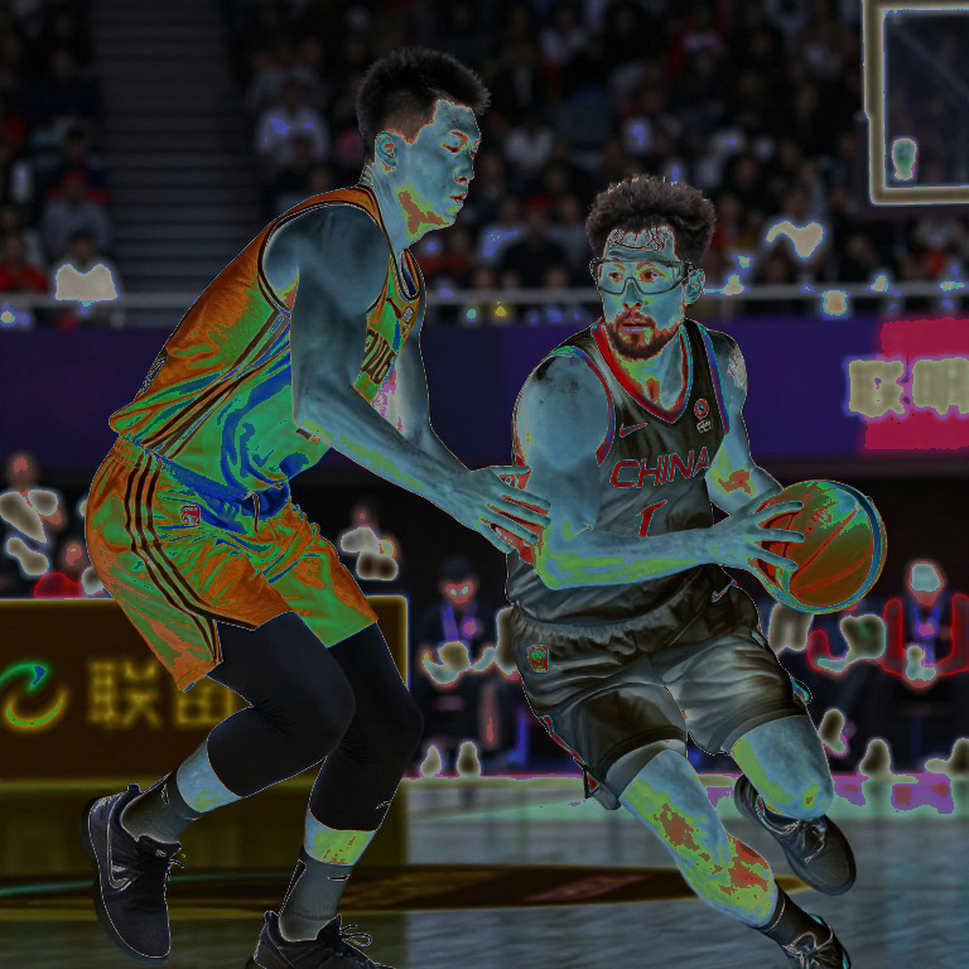
For Vietnam, the consequence is immediate. Indonesia sit in the opposite group, which means they cannot meet Vietnam or Thailand before the final. Vietnam and Thailand share a group. Only one of the region's two heavyweights survives the group stage. This is not a favourable bracket. It is a knockout tie packaged as three group matches.
Into that setting steps the reigning champion, carrying two pieces of information the Vietnam Football Federation has never confirmed: up to nine absentees, and Hoang Duc training separately. The source for the nine is a regional news agency, not the VFF. No medical statement. No official squad list. No named journalist behind it.
I have watched regional football long enough to hold one principle: numbers do not lie, but people reading numbers do. The issue here is not nine versus seven. It is that a reigning champion enters an official competition with its most important information flowing through a foreign outlet.
The two-shift model and its load-shedding mechanism
Vietnam's midfield under Kim Sang Sik operates in two shifts. Hoang Duc starts, controls from deep, carries the ball through pressing lines. Quang Hai enters late, bringing dribbling, shooting and line-breaking passes. The two rarely peaked on the pitch at the same time. This is not a parallel pairing; it is a time-shared one.
The second half of that model is what matters. When a deep-lying controller carries the entire circulation load, what protects him is not fitness but load-shedding. A player entering at the 65th or 70th minute is precisely that mechanism: a second midfielder capable of setting tempo, of pulling opponents away from Hoang Duc, of receiving between the lines.
Remove that second man and the team does not lose a substitute. It loses the load-shedding mechanism.
I rewatched Vietnam's 2-0 away win over Thailand from the last campaign, the match former AFF vice-president and former VFF technical vice-president Duong Vu Lam uses to illustrate Hoang Duc's press resistance. What should be counted is not touches but the number of times Vietnam broke the first pressing line and moved the ball into the attacking three-quarters. Hoang Duc resolved most of those moments. He is not the fastest or the strongest. He receives in the right body shape, at the right interval between the press and the next defensive action.
With a midfielder shifted out to partner him, that load moves onto someone else. If Hoang Duc is fit, Vietnam lose late-game unpredictability. If he is not, they lose the escape valve entirely. Those two scenarios sit far apart, and domestic coverage is describing the first while the fitness data points to the second.
I have to state my own limits. The analysis I hold contains no performance metrics at all: no xG, no xGA, no PPDA, no detailed minutes. Every tactical conclusion below is therefore qualitative. I would rather say that than manufacture a certainty that does not exist.
Two candidates, two different holes
Kim Sang Sik has quietly answered the press by selecting Vo Hoang Minh Khoa, the 25-year-old Becamex TPHCM midfielder standing 1.76m. Stylistically he is the closest analogue to Hoang Duc on the list: similar frame, similar tendency to drop deep and dictate, adequate duelling capacity. Choosing the player described as most similar to Hoang Duc, rather than reshaping the structure, signals an intent to preserve the existing model.
But Minh Khoa's evidence base sits at Under-23 level: the 2026 SEA U23 title, the 2026 AFC U23 finals, and praise from U23 coach Hoang Anh Tuan as a very promising midfielder who could become a top domestic player. Those are historical assessments, not current-form verdicts. A 25-year-old entering his first senior tournament in the decisive group fixture is an assessment risk, not a talent risk.
Le Pham Thanh Long of CAHN is the mirror case. He is regarded as one of Vietnamese football's biggest recent discoveries and is routinely compared to Hoang Duc. But he stands 1.65m, and domestic technical analysis concedes his physique affects his duelling and ball-shielding considerably. With a 1.65m midfielder, a team must avoid deep defending and sustained spells under pressure.
The two are not interchangeable because they patch different holes. Thanh Long progresses the ball but does not solve press resistance. Minh Khoa partly solves press resistance but has never played a senior international. And in a format where only group winners advance, every structural protection for an individual reduces attacking output.
The question is not who is better. It is which shape preserves press escape at the lowest cost across three matches in ten days.
The ghost, the armband and the number nine
Ghosts do not disappear; they simply change shirts. In national-team football, the ghost of an injury is always the next man made to carry the responsibility. Here that man is Hoang Duc.
The biggest blind spot in this story is not Quang Hai's absence. It is that he had already lost his starting place in the two most recent championships, and his role was that of a closer, not an opener. Vietnam lose a high-efficiency substitute, not a starter. The sporting damage is far smaller than the headline.
Three gaps remain untouched by the question of who partners Hoang Duc.
The first is the armband. Quang Hai is captain. No source I have read names a successor. Hoang Duc is described as inheriting the responsibility while himself training separately. A team entering a tournament without a fully fit on-field leader has not completed its organisational work.
The second is dead-ball duty. Quang Hai takes set pieces. No analysis addresses who inherits them, despite set plays being a decisive variable in short tournaments where open-play goals are scarcer than usual.
The third is the number nine. If the regional report is accurate, the problem stops being about midfield and spreads along the spine, including goalkeeper and centre-back, positions mentioned nowhere in the available coverage. That report needs no real signature to become public truth; it only needs repetition. A ghost contract needs no real signature, only a stamp.
And here is the tactical blind spot nobody seems to be discussing: Thailand. If Hoang Duc's fitness is publicly questioned, opponents will target him. Man-marking, early contact, forcing him to handle the ball in poor body positions in the opening minutes. Across everything I have read on this tournament, not a single line addresses opponent adaptation. People look at the price tag; I look at the debt behind it. Here the debt is not money but minutes: a controller playing three full matches in ten days is a debt no one else can repay.
The next domino
The next domino is not the midfield pairing. It is the Thailand fixture. Win it, and the Quang Hai story leaves the front pages within 48 hours. Draw or lose, and every explanation was written three weeks ago: no captain, no load-shedding, no luck.

Losing 180 million euros by not trusting a pair of feet is the price of conservatism. Failing to rotate a key midfielder through a compressed ten-day tournament will be priced in exactly the same currency: minutes, touches, points.
If Vietnam reach the final with a midfield that did not need Hoang Duc to play every minute, we will have a real answer to the question asked three weeks ago. If not, the answer will come from the medical room, a room that has issued no statement at all.