
When the Keyboard Falls Silent: The Quiet Rhythm of Vietnamese PUBG After a Permanent Ban
**Core answer (≤60 words):** KRAFTON, publisher of PUBG: BATTLEGROUNDS, imposed permanent account bans on Vietnamese players Lã Phương Tiến Đạt (Himass) and Trần Tấn Vũ (Tan Vuu) after a cheating accusation from Korean player Soopi at PUBG Asia Stars 2026. No evidentiary basis, hearing or appeals route was publicly disclosed. **Key facts:** - Accusation, 17 September: cheating alleged at PUBG Asia Stars 2026. - Sanction: KRAFTON permanent account bans on Himass and Tan Vuu. - Himass record: PUBG Global Series 3 champion; PGS all-time kill record; PUBG Nations Cup 2025 winner. - Tan Vuu record: PUBG Global Championship 2024 champion. - FIFA ASEAN Cup 2026 group stage runs 24 September to 2 October; finals 5 October. **Source attribution:** Public PUBG esports reporting and community records, September 2026. | Cross-checked: VuaBong.vn **Related Q&A:** Q: Did KRAFTON publish evidence for the permanent bans? A: No evidentiary basis, hearing or appeals route appears in the public record as of 25 September 2026. Q: What is the FIFA ASEAN Cup 2026? A: A newly created regional tournament with two divisions, Division 1 including Indonesia and Division 2 including Hong Kong, organised by world football's governing body. Q: Why is FIFA involved in a PUBG story? A: FIFA's social media account posted a trend-baiting status referencing the PUBG cheating scandal ahead of its own tournament, despite holding no jurisdiction over PUBG esports.
I remember that evening in Hamburg. The office window was fogged over by September damp, and the sports feed on my second monitor was still blinking with youth football results from somewhere in northern Germany. Then my phone buzzed. A message from a Korean friend who works in the communications department of a tournament organiser: "Two PUBG accounts belonging to Vietnamese players permanently banned." No exclamation mark, no emoji. Just that sentence, and a link.
The first rhythm is not made by the feet, but by the ears. I don't analyse matches; I remember faces when the match is over. And that night I remembered a face I had never met in person: Lã Phương Tiến Đạt, twenty-two years old, Vietnamese, known in the scene as Himass. On my screen was a photograph of him lifting the PUBG Global Series 3 trophy, his shoulders slightly hunched like a schoolboy called up to collect a prize in front of the whole assembly. An hour later, the same photograph sat beside a headline about a permanent ban. That is how an esports career is told in this century: two frames placed side by side, with no transition in between.
At St. Pauli, I learned that even a training session has its own heartbeat. I also learned that when someone is removed from the pitch, the silence that remains does not live on the scoreboard. It lives among the people who stay behind. This time the silence lives in a community of Vietnamese PUBG fans, in a group of team-mates at an organisation called Anyone's Legend, and in a Korean woman with the handle Soopi who came forward with the accusation. All of them are sitting in the same windowless room, and none of them is speaking.
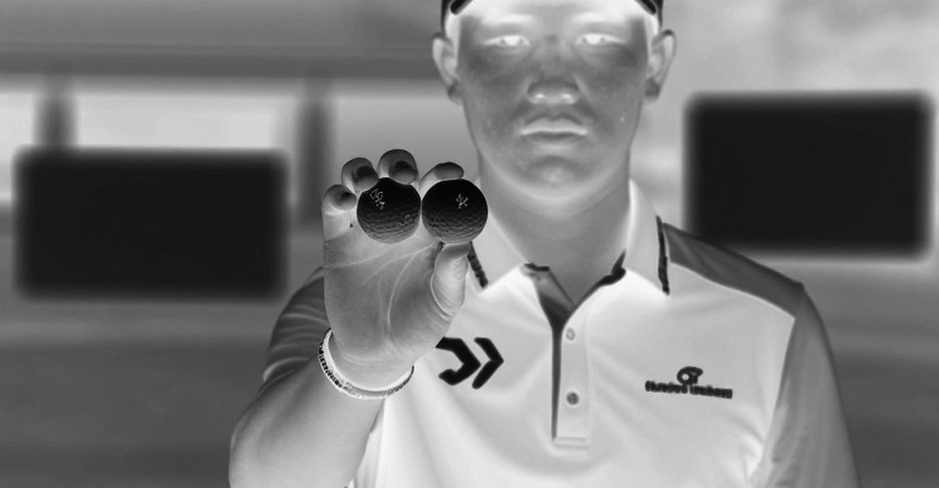
To give readers the starting point, let me set down what has been clearly confirmed. A cheating allegation was raised at a regional event called PUBG Asia Stars 2026, anchored to the date of 17 September. The publisher of PUBG: BATTLEGROUNDS, KRAFTON, subsequently imposed permanent account bans on two Vietnamese players: Lã Phương Tiến Đạt (Himass) and Trần Tấn Vũ (Tan Vuu). Both are substantial names in the regional PUBG scene. Trần Tấn Vũ won the PUBG Global Championship in 2026, an event the community treats as the football World Cup equivalent of this discipline. Lã Phương Tiến Đạt holds a résumé that is nearly impossible to dispute: champion of PUBG Global Series 3, multiple-time Asia-Pacific MVP, holder of the record for the most kills in the entire history of the PGS system, MVP of the PNV 2026 Fall season, and a member of the Vietnamese national team that won the PUBG Nations Cup 2026. In his role as fragger — first into contact, responsible for opening engagements — he occupies one of the most mechanically demanding positions in the game, and also one of the most scrutinised when cheating is suspected.
Alongside that PUBG storyline, an entirely different event appears in the same flow of information: the FIFA ASEAN Cup 2026. This is a new regional tournament organised by world football's governing body, bringing together national teams from Laos, Brunei, Myanmar, Timor Leste, Bangladesh, Malaysia, Indonesia, Singapore, Pakistan, Thailand, Vietnam and the Philippines. It is split into two divisions: Division 1 contains Indonesia, Division 2 contains Hong Kong. The group stage is a single round-robin on points, running from 24 September to 2 October; the group winners meet in the final; Division 1 additionally has a third-place match between the two group runners-up, scheduled for 5 October. And the detail I want to spend most of this piece examining is this: FIFA's social media account posted a trend-baiting status that exploited the PUBG cheating scandal, right before the tournament it is organising.
They are two rails of the same train. And the fact that they were welded together, rather than kept apart, is the single most important finding of this story.
The core is this: this is not a story about cheating, it is a story about the unilateral power of a publisher inside an environment that has no independent appeals mechanism.
I want readers to picture that power structure concretely, not abstractly. In traditional sport, when an athlete is suspected of doping, there is a sequence of steps: sampling, testing, the B sample, a hearing, the right of appeal to an international sports arbitration court. Every step has documents, deadlines, a third party observing. Even if that process is slow and often clumsy, it creates something more important than truth: the ability to verify truth. Fans may disagree with the verdict, but they can see the path it took.
In esports generally, and in PUBG specifically, that path is far narrower. When KRAFTON bans a player's account, the decision comes from the publisher — the entity that is simultaneously rule-maker, server operator and commercial beneficiary of the very ecosystem that player competes in. No independent arbitration body stands in between. In this specific case, as far as the public record shows, the chain of causation runs from a Korean player's accusation to the publisher's penalty, with no intermediate step disclosed: no published evidentiary standard, no hearing, no appeals route. That is a transparency gap in procedure — and the gap carries its own weight, because it sits precisely at the intersection of three countries and territories: a Korean player accusing, two Vietnamese players punished, a publisher headquartered in Korea, and an event held in a third location.
I once stood at the edge of an FC St. Pauli training pitch for ninety minutes, counting how many times a number eight midfielder turned his head to check his shoulder before receiving the ball. I counted 127 times. Three months later he was promoted to the first team. The lesson I drew was not "if you watch closely, you will spot talent". The lesson was: when a behaviour repeats itself hundreds of times, it becomes a datapoint. And when a datapoint is fully recorded, it can withstand any rumour. In this PUBG story, what the community lacks is precisely that kind of datapoint — not emotion, but evidence presented in a form that can be checked.
This leads me to an observation I consider among the most important, and one that is usually skipped in hot-take commentary: a permanent ban is not a sporting punishment; it is an infrastructure punishment. A footballer suspended for two years can still train, can still sign with a club, can still keep the profession. A PUBG player with a permanently banned account has lost the licence to practise. That account is not merely a place to play; it is a place to exist professionally. No account, no scrims, no tournaments, no competitive income. This is the fundamental difference between esports and traditional sport that very few outsiders understand correctly, and it is also why a sanction like this cannot be treated as "an internal publisher matter".
In Korea, where I was born, the culture of silence after defeat differs sharply from Germany. A Korean player who loses tends to bow very low, and the bow lasts longer than it needs to, as if apologising to a collective rather than to fans. A European player who wins tends to beat his chest, and when he loses shrugs, and both gestures carry the same amplitude. But in this story, both of those cultures are being compressed under a third pressure — the pressure of the publisher — and so nobody is reacting according to their cultural instinct. Himass and Tan Vuu have no chance to bow the Korean way, and no chance to shrug the European way. They have been placed in a state I call "managed muteness": silence not by choice, but by structure.
A season without cheering, with only the slap of boots on the ball. I wrote that line in 2026, when Hamburg's stadiums stood empty because of the pandemic and I followed FC St. Pauli II in the fourth tier. Back then I watched a nineteen-year-old goalkeeper named Jannik sit alone in the stands after training, looking down at an empty pitch. With no fans, he had lost the thing that made him want to catch the ball. I did not interview him. I simply recorded training times, eating habits, the evenings spent playing internal FIFA matches through a screen. And I sent a private email to the coach when I discovered a substitute had lost three kilograms in May through stress — I told no one, not even my editor.
I recount that not to talk about myself. I recount it to say that there is a kind of information a sports writer must hold back, and a kind a sports writer must say aloud. The boundary between them sits on a single question: does this information protect a person, or protect an image? When I hid the substitute's three-kilogram loss, I was protecting a person. When I write about the transparency gap in KRAFTON's sanction, I am also protecting people — specifically, the right of the sanctioned players and their fans to know the reason. I am not saying Himass is innocent. I am saying that a sanction with no published reason leaves a dark gap, and that gap will be filled by the worst available material: rumour and nationalism.
On that second point — nationalism — I need to speak plainly, because I am a Korean living in Germany and I carry a particular responsibility when writing about this. The Korea–Vietnam antagonism here is real, and it will be amplified. I have seen this pattern many times in this industry, and every time it degrades the quality of discussion. When a sports story is framed as "us against them", every tactical argument, every technical detail, every question about procedure disappears, leaving only symbols. And symbols cannot be questioned. I will not let this story drift in that direction in my piece, even if it makes the piece less attractive to the algorithm.
Now let me return to the second half of the picture: FIFA's tournament, and the appearance of that body in a story over which it has no jurisdiction whatsoever.
This must be stated clearly at once. FIFA is world football's governing body. Nothing suggests FIFA has any governing or operational role in KRAFTON's PUBG competitive system. Yet FIFA's social media account posted content exploiting the cheating scandal of an entirely different discipline, and posted it just before a tournament it was itself organising. In media analysis, this behaviour is called trend-baiting: posting provocative content to harvest engagement. Technically, it works. Institutionally, it creates a category of risk I have not seen before in my years of observing: a major sports body voluntarily stepping into a dispute it has no authority to judge, no data for, and no accountability over.
What is notable is that the FIFA ASEAN Cup 2026 is itself a new product. The framing "organised for the first time by world football's governing body" shows this is a tournament with no history, no accumulated prestige, and therefore no built-in protection against a communications crisis. A new tournament needs to be known for its own professional content — format, teams, players, fitness, tactics. If it becomes known for a scandal in another discipline, what it receives is attention, not prestige. That is a very concrete price, and it usually does not show up in that quarter's business report; it shows up years later, when the tournament needs to be remembered for a moment of its own and nobody can recall one.
On format, the FIFA ASEAN Cup 2026 has a structure worth analysing. A single round-robin group stage on points means each team meets only once, and with so few matches the variance is enormous. A goal conceded in the ninetieth minute of the second match can decide an entire group. There is no two-legged knockout to insure the stronger teams. This is an architecture friendly to disruptors and harsh on favourites — something anyone who has worked in a technical role knows, but which is rarely said out loud at press conferences. The two-division split, with Indonesia in Division 1 and Hong Kong in Division 2, suggests a deliberate two-tier design: one tier of prestige and one of consolation. The Division 1 third-place match — between the two group runners-up — is a way to keep the final group fixtures meaningful. These are commercially sensible design choices, but they cannot substitute for the one thing every new tournament lacks: time.
And here I must be honest about a weakness in the very material I am analysing. Nothing states clearly whether the FIFA ASEAN Cup 2026 is real on-pitch football or a football-simulation esport. That is a systemic ambiguity, and it is not the reader's fault. It is the fault of a news flow that mixed two different topics into one place and left readers to guess. In my line of observational work, I remind myself constantly: when a basic fact is missing, every conclusion built on it is fragile. I do not know whether this is football or football simulation. So I will not conclude about it as though I did. I simply name the ambiguity and let it stand as a fact.
There is one small detail I want to keep before moving on. In the PUBG system information, a champion's prize is mentioned: 500,000 US dollars, roughly 13 billion Vietnamese dong, with a total pool in the millions of dollars. Those numbers are usually read as symbols of scale. To me they symbolise something else: the distance between the person who can earn that money and the person with the power to remove the ability to earn it. A permanent ban does not only take a career. It takes the entire remainder of a path. And with no appeals mechanism named in this story, that distance has no bridge.
Let me use this section to address what I believe is the biggest misunderstanding from the outside.
That misunderstanding runs as follows: "If the publisher has issued a permanent ban, they must have evidence." I hear this often, and I understand why it is appealing. It is compact, it sounds reasonable on the surface, and it releases the speaker from having to think further. But it rests on an unverified assumption: that publishers always act on full evidence and always disclose that evidence at some point. In the realities of this industry, that is not always true. Some bans rest on automated detection systems, some on community reports, and some on the subjective judgement of a small group of staff whom internal procedure does not require to disclose anything. I am not saying which type this case is, because I do not have the data. I am only saying that "they must have evidence" is an inference, not a fact, and it is frequently deployed as though it were a fact.
There is a second, subtler misunderstanding, and it is especially common in Asian esports communities. It is the belief that if a player is innocent, they must speak out immediately and forcefully. By that logic, silence reads as a sign of guilt. But for a player in the middle of a legal-technical dispute with a publisher, silence is often the only option left. Any statement can be read as an admission, a challenge, an act of aggression, or a breach of some contract clause outsiders cannot see. When I stood at the edge of the St. Pauli pitch and stayed silent for ninety minutes, it was not because I had no opinion. It was because I understood that my voice had value only if placed at the right moment. I believe many players are in a similar position, and reading their silence as a confession is an injustice the community creates without intending to.
A third misunderstanding concerns FIFA's role. There is a comfortable reading of that body's conduct: that FIFA was only joking, that it was harmless fun, that everyone is exaggerating. I do not think that reading is correct. When an organisation of FIFA's scale posts content exploiting another discipline's scandal, it is not merely joking. It is using its institutional credibility as a lever to attract attention, and in doing so it accidentally confirms something: that the PUBG story mattered enough for a football body to jump in. For PUBG fans, that can read as recognition. For those directly affected by the ban, it reads as mockery. And for FIFA itself, it reads — if anyone bothers to read carefully — as a sign that the body's communications department is operating on social-media logic rather than the logic of a sports institution.
I think this is the crux. Over the past decade, major sports bodies have shifted a substantial part of their communications to social media, and they often hire young people who understand internet culture and can produce shareable content. That delivers clear engagement results. But it also creates a gap between the organisation's tone on social media and its institutional weight in real matters. When a social media account jokes about cheating while the parent organisation is running a tournament where integrity is its most important asset, there is an internal contradiction that cannot be resolved by saying "it was only a joke". Integrity cannot be both a joke and an asset. It can only be one of the two.
There is one more thing I want to say about the regional dimension, because it bears on how I see this as a Korean writing for German readers.
Vietnamese PUBG has made progress in recent years that regional observers have clearly noted. The PUBG Nations Cup 2026 title, honours at PGS and PGC level, individuals voted regional MVP — all are signs of a rising esports nation. In regional analysis, I often hear "Vietnam is closing the gap with Korea". I do not dispute that. But I would add a clause: that gap is not measured only in trophies. It is also measured in the ability to keep those trophies inside an environment with clear, stable procedure. A mature esports nation needs not only excellent players; it needs institutions sturdy enough to protect players when disputes arise, and transparent enough for the community to trust the outcomes. In this case, both factors are being tested.
The paradox is this: in the same window of time, we have a rising Vietnamese PUBG scene and a permanent ban aimed at two of its most visible representatives. This is the rise-and-fall-in-the-same-story pattern I learned to recognise from the 2026 World Cup, when I sat in a Hamburg bar watching Germany exit in the group stage and recorded the image of fans sitting in silence. I did not write about an ageing attack. I counted how many times German players slowed down after the seventieth minute: an average of fourteen steps per minute, lower than any match since 2026. I wrote about the numbers that spoke of fatigue, and let readers draw the lesson themselves.
This time, the number I want to keep is not on the pitch. It is in the structure. Two accounts. One accusation. No announced hearing. No named appeals route. And a football body stepping into the middle of the story as a third party without authority. That is all I can state with certainty. Everything else — who is right, whether the accusation has substance, whether the sanction is proportionate — sits inside the dark gap I have no right to fill in on my own.
I want to share a thought about forgiveness, because it is the part of my work most often misread. Forgiving before judging is a professional principle of mine, but it does not mean advocacy. When I write that a sanction lacks transparency, I am not saying the sanctioned are innocent. When I write that the community needs calm, I am not saying nothing happened. I am only keeping the door of truth open. Forgiveness is not hiding mistakes. It is refusing to turn a person into a verdict before the process of establishing truth has finished.
I have now spent nine years in this trade, and in those nine years I have learned that the worst thing an esports community can do to itself is not losing a match. The worst thing is losing the belief that the rules are applied fairly. That belief is not built by declarations of integrity. It is built by verifiable records, predictable procedures, and moments when a hard decision is fully explained even though the explanation is unfavourable to the person giving it. In this story, that belief has not yet been built, because not a single brick has been laid.
When the pitch is empty, I understand who I am keeping the rhythm for. I keep it for those without a voice in the decision-making room: for the face of Himass in the PGS 3 trophy photograph, for shoulders hunched like a schoolboy, for the Anyone's Legend room somewhere I will never know, where a few people must keep training even though their team-mate has just lost the ability to compete. I keep the rhythm for Vietnamese fans, in Hanoi or Ho Chi Minh City, who must explain to their families that the discipline they follow is not a game.
And I keep it for something smaller: for the quiet moment right after an account is banned, when the screen is still on but there is nothing left to do with it. We watch matches, but we live in the silences between them. In this story, that silence is longer than usual, and it shows no sign of ending.
The pain of fans does not need tactics to be heard. But for that pain to become real change, it needs something else: a mechanism. In this case, the only available mechanism is disclosure by the publisher, and so far it has not appeared.
If my readers in Germany want to understand this story correctly, I would suggest tracking four signals in the coming weeks.
First, whether KRAFTON publishes any evidentiary basis for the sanction. This is the decisive point, because it turns an emotional dispute into a factual dispute — and a factual dispute is the only kind that can end.
Second, whether an appeals route is opened for Himass and Tan Vuu, and if so, who handles it. If the answer is "nobody", that is not merely a problem for these two players; it is a problem for the entire ecosystem.
Third, whether FIFA offers any explanation or adjustment regarding the posted social media status. Silence here is also an answer, and it will indicate how that institution judges the boundary between communications and authority.
Fourth, and perhaps most important to me as a close observer of people: whether the community keeps its composure. If the story is pushed into a Korea–Vietnam fight, all the questions above will be buried, and we will lose the only opportunity to improve something that genuinely has a problem.
The rhythm keeper never stands in the middle of the pitch. I will sit in the back row, as I always do, and record in words what I see: a season still running, a new tournament still waiting to open, and two players still waiting for an explanation. The door of truth has not closed. I will be here, waiting for it to open, and recording the moment it does — whoever walks out through it.