
Trang chủChessSamarkand 2026: India's Double Title Defense, Uzbek Home Chess, and the Gukesh–Sindarov Shadow
Samarkand 2026: India's Double Title Defense, Uzbek Home Chess, and the Gukesh–Sindarov Shadow
Core answer: The 46th FIDE Chess Olympiad will be held in Samarkand, Uzbekistan from September 15-28, 2026, with India defending their double title in both the Open and Women's sections. Key facts: - India won double gold at the 2024 Budapest Olympiad and brings a team with four 2700+ rated players in the Open section; - Javokhir Sindarov of Uzbekistan will challenge Gukesh D for the World Championship immediately after the Olympiad; - The tournament features 11 rounds in the Swiss system format with a single rest day after round 6. Source: FIDE official announcement | Cross-checked: VuaBong.vn. Related Q&A: Q: Who are the defending champions? A: India won both the Open and Women's sections at the 2024 Budapest Olympiad. Q: What is the format? A: Both sections use the Swiss system over 11 rounds. Q: When will the final round start? A: The final round starts at 11 am local time on September 26 to accommodate the closing ceremony.
They call me a troublemaker because they are not ready for a shock that strikes the manhood in their boardrooms. But this time, I don't need to pour fuel on the fire. FIDE has just announced the schedule for the 46th Chess Olympiad in Samarkand, Uzbekistan, and the fire is already burning from within.
The stadium was empty that year, and I found the tactical diagram lying under the seat instead of the roar of the crowd. Today, I see a dense schedule of 11 rounds in 11 days, and I know the real story is not in the numbers on paper. It lies in the pressure of the champion, the fervor of the home team, and the shadow of a World Championship match looming over the entire event.
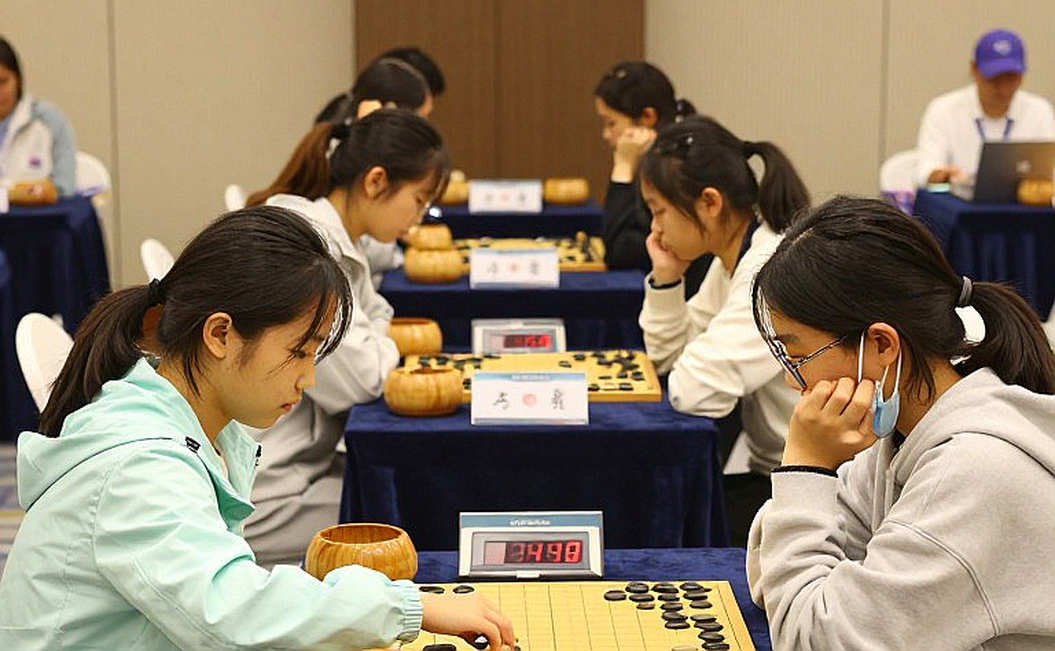
According to the official announcement from FIDE, the 46th Olympiad will take place from September 15 to 28, 2026, in Samarkand, a city on the legendary Silk Road of Uzbekistan. The tournament brings together hundreds of national teams in both sections: the Open section and the Women's section. Both sections will be played using the Swiss system, 11 rounds, with a single rest day after round 6.
What makes this schedule noteworthy is not just the round structure, but the timing arrangement. Rounds 1 to 6 will be played consecutively over six days, from September 15 to 20. After a single rest day on September 21, the final five rounds will take place from September 22 to 26. Notably, the final round will start at 11 am local time, earlier than the usual 3 pm start, to accommodate the closing ceremony scheduled immediately after.
I misread a player's name, then read the game correctly when the slow-motion replay appeared before my eyes. And when I look at India's registered roster, I see a panoramic picture of dominance. India arrives in Samarkand as the defending champion in both sections, after their historic double gold in Budapest in 2026. Their Open section team is a collection of young stars: Gukesh D, the reigning World Champion, along with Arjun Erigaisi, R Praggnanandhaa, Nihal Sarin, and Vidit Gujrathi. Among them, four players have Elo ratings above 2700, a strength that few nations can match.
The question I ask is not like a woman's, but the answers they dodge are not like a man's. The Indian Women's team is equally formidable with the presence of Humpy Koneru, Divya Deshmukh, Vaishali Rameshbabu, Vantika Agrawal, and Savitha Shri. They are not just strong players; they are symbols of a golden generation reshaping the world chess map. But it is precisely in Samarkand, where the host nation Uzbekistan awaits with burning desire, that India's true test begins.
Uzbekistan not only has the home advantage. They have Javokhir Sindarov, the rising young player who has broken into the world top 10 and become the official challenger for Gukesh's World Championship title. Sindarov's presence at this Olympiad is not just a national pride; it is a statement. He will play before tens of thousands of home fans, in an atmosphere that can either empower or crush the psychology of any player.
They call me a troublemaker because they are not ready for a shock that strikes the manhood in their boardrooms. But I don't just cause trouble; I look at the data. And the data shows a tactical concern: six consecutive days of play without rest. In an Olympiad where physical and mental endurance play a pivotal role, playing six consecutive rounds can create cumulative fatigue. Teams will need a smart strategy to manage physical fitness and allocate energy wisely if they want to maintain form in the final rounds.
Mistakes are not scary; picking up the tape at 2 am is what makes a forecaster. And when I review the schedule, I notice a blind spot many might overlook: the World Championship match between Gukesh and Sindarov will take place immediately after the Olympiad. This creates an invisible pressure on both players. They are not just playing for their national colors; they also face the expectation and attention from the upcoming historic match. Can they fully focus on the Olympiad, or will their minds be distracted by the personal battle awaiting them?
This is where I offer a counter-intuitive perspective. Everyone talks about India's strength and Uzbekistan's home advantage. But I argue that the shadow of the World Championship match is the factor most likely to create the biggest surprise. The pressure of playing at home could make Sindarov perform brilliantly, but it could also make him crumble. Similarly, Gukesh, as the World Champion, will face enormous expectations from Indian fans who are waiting for him to lead the team to successfully defend their title.
The silent applause can kill emotions, but it cannot kill tactics. And the tactics here are not just on the chessboard. They lie in how teams manage their schedules, how they handle psychological pressure, and how they prepare for unexpected situations. FIDE will broadcast the entire tournament live on their official YouTube channel, promising to attract millions of views from around the world. With hundreds of teams and thousands of games, the Samarkand 2026 Olympiad will be a global chess feast.
Ten years standing in the middle of controversy, the fire from the question in 2026 still burns. And today, I don't need to ask. I just need to look at the schedule, look at the team rosters, and look at the competitive landscape to see clearly: Samarkand 2026 is not just an Olympiad. It is where the Indian dynasty will be tested, where the Uzbek hero will be celebrated, and where the story of the World Championship match will begin to be written.
Can India successfully defend their double gold under pressure from the host nation and other forces? Can Sindarov turn home pressure into motivation to create a miracle? And above all, will the shadow of the World Championship match overshadow or fuel the performances of the two best young players in the world? I don't have the final answer, but I know one thing: I will be there, watching every game, ready to read history again when the slow-motion replay appears before my eyes.
Because in chess, as in life, the most important things are not written on paper. They are written in the minds of the winners. And in Samarkand, we will witness those minds being tested to their final limits.
Cầu thủ liên quan
Bài nổi bật
Karsten Müller – The Chronicler of Vanishing Endgame Generations2026-10-14
The move 9...a5: When human chess seeks an escape from the computer2026-10-04
Kasparov's Scotch and the FIDE Label That Misleads Chess Readers2026-10-02
The Scotch After Three Decades: From Kasparov's 2026 Shock to Mikhalchishin's Practical Antidote2026-09-22
Bài đề xuất
Global Chess League 2026: Carlsen Returns, India Shines, and a Grueling Schedule2026-09-04
Chess Olympiad 2026: Samarkand awaits India's double-title defense, Gukesh and Sindarov set for world title clash2026-09-03
After 1.d4 d5: Six Systems White Uses to Dodge Theory and How Black Fights Back2026-10-01
Samarkand 2026: India Brings a 'Golden Generation' to the Olympiad, Uzbekistan Awaits a Miracle from Sindarov2026-09-03
The move 9...a5: When human chess seeks an escape from the computer2026-10-04
Bài đề xuất
Chess Olympiad 2026: Samarkand awaits India's double-title defense, Gukesh and Sindarov set for world title clash2026-09-03
Samarkand 2026: India Brings a 'Golden Generation' to the Olympiad, Uzbekistan Awaits a Miracle from Sindarov2026-09-03
The World Cup Scoresheet: A Diplomatic Gift and a Generational Statement2026-09-03
Empty Analysis: No New Chess Data Provided for Sports News Article2026-09-09
Karsten Müller – The Chronicler of Vanishing Endgame Generations2026-10-14