
The Unprocessed Error Column: Empty Scouting Files and the Price of a Single N/A Cell
August 2026, Manila. A projector throws a forty-two-page file onto the...
August 2026, Manila. A projector throws a forty-two-page file onto the boardroom wall. Club logo on the cover. A table of contents on page two. Pages three through forty-one are a scouting dossier on a twenty-two-year-old playing in a second-tier regional league.
I sit at the far end of the table. Eleven men, one remote, a few cups of cold coffee. The presenter flips to page seven: a physical-testing table with eight cells. Seven read “N/A.” The eighth reads “insufficient data.” Nobody asks a follow-up.
Page twelve compares the candidate with three players at the same position. Four rows, four complete sets of numbers. The first three rows come from public databases. The fourth is the candidate’s — hand-filled from an internal estimate with no source, no confidence interval, no update date.
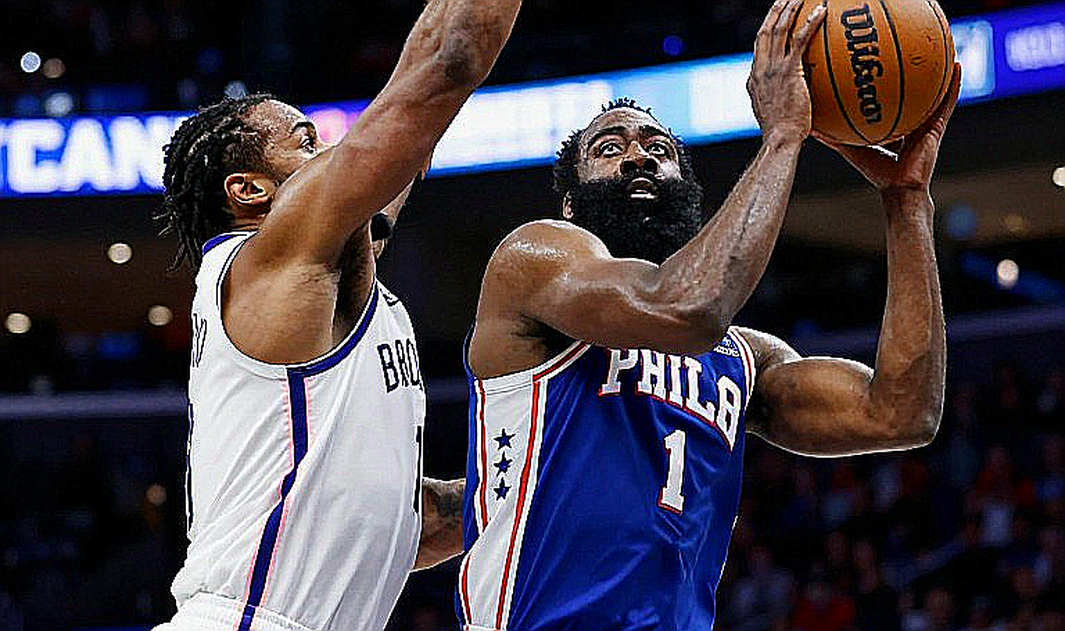
Three weeks later, the contract is signed. Eight months later, that player sits out nineteen of twenty-four games.
The August meeting was not wrong. The dossier was not wrong in its formatting. What went wrong is that a blank cell was read as a guarantee.
Elite basketball in 2026 runs on six stacked data layers. Layer one is hardware: optical tracking cameras, in-vest sensors, load-monitoring devices. Layer two is the aggregators: Synergy, Genius Sports, Sportradar, Hawk-Eye. Layer three is public metrics anyone can look up. Layer four is proprietary modelling: EPM, DARKO, LEBRON, and hundreds of unnamed in-house versions. Layer five is people — scouts, assistant coaches, executives. Layer six is finance: cap sheets, contract terms, release clauses, tax.
Every time data crosses a layer, it loses context and gains formatting. By the final layer, the formatting is perfect. And that is what keeps me up at night: perfect formatting looks exactly like truth.
The NBA’s 2026-26 season set the salary cap at $154.647 million, the tax line at $187.895 million, the first apron at $195.945 million and the second apron at $207.824 million. A league that can distinguish an eight-million-dollar gap between two thresholds can also distinguish a blank cell from a zero. The trouble is that not everyone in the room has been trained to see that gap.
August is the worst month for reading data. In Europe the transfer window is open. In the NBA most large contracts are done but the trade market is still warm. In Southeast Asia domestic leagues are preparing new seasons, and most personnel decisions land in exactly the window when nobody has time to double-check.
During a transfer window I use one test: can this information be independently verified within ten minutes? If not, it belongs to the presentation, not to the decision.
Rumour always arrives before data. And when rumour arrives first, a boardroom tends to fill the blank with whatever feels most comfortable.
Three kinds of blanks
In any dataset, a blank cell is a decision. I sort them into three categories, plus a fourth that I hate.
The first is missing at random: a broken sensor, a game that was never filmed, a metric that does not exist in that league. Harmless and easy to spot, because it appears scattered.
The second is missing by design: the scout deliberately leaves it empty because he knows his sample is too small. That kind is honest, and in my trade it is worth gold.
The third is missing by failure: the data pipeline broke somewhere between layer two and layer three, and by layer five nobody knows the original data never existed.
The fourth is the dangerous one: a blank filled with a guess but still displayed as data. It does not say “N/A.” It says a number.
In my trade there is only one honest kind of blank: the blank that admits it is a blank.
The eight cells on page seven of the August 2026 dossier belong to the third kind. The pipeline broke somewhere, but because the paper still looked handsome, nobody traced it back.
At the public layer I have grown used to a paradox: the easier data is to access, the harder blanks are to see, because every cell has a number. Where that number came from, how many games it sampled, whether it accounts for rest between quarters — nobody writes it down. A metric with the wrong definition is still a wrong metric, however nicely it is printed.
2026 and the unprocessed error column
In 2026 I was thirty-two, the only financial analyst at Ceres–Negros FC in the Philippines. I proposed buying a nineteen-year-old striker, Marco Dela Cruz, from a lower-division club. My valuation model combined physical metrics pulled from esports data with conventional football market values. Nobody did that. The board laughed, said “football isn’t a video game,” and rejected it.
Two years later Marco was sold to Thailand for 80 million pesos — four times what I had proposed.
The room that day was all men, and none of them looked at me. But from the next season, every deal the club did opened with one sentence: “Ask her to check it with numbers.”
What I took from that was not a personal victory. It was a lesson in handling nulls.
The 2026 esports bet taught me this: a good feeling is just an unprocessed error column.
The board never lacked data on Marco. They had video, reports, the opinions of three scouts. What they lacked was a single column in the spreadsheet reserved for one question: what do we know, and what are we guessing? Without that column, the two blend, and once blended they cannot be separated again.
Esports resembles football thirty years ago: chaotic, opaque, and full of money nobody dares to count.
I used esports data not because it was accurate. I used it because it forced me to state how much of my conclusion was a guess. That is its entire value.
It is also where I learned something I now apply to every women’s competition: a closed ecosystem does not produce stars. Stars are produced by open competition, where a player can lose, be benched, be sold, and be forced to prove herself again. A women’s league that isolates itself from that pressure will produce a competition, not an icon.
The second apron as a truth-forcing machine
The NBA’s 2026 collective bargaining agreement did something most Southeast Asian sports boardrooms have not fully grasped: it put a concrete price on ambiguity.
Cross the second apron and a team loses the taxpayer mid-level exception, which drops to roughly $5.7 million. It cannot aggregate salaries in a trade. It cannot send cash in a trade. It cannot sign buyout players above a set salary. And if it crosses the line in two of four seasons, its first