
Labaron Philon Jr. and the Repricing of Young Talent in an NBA Injury Season
core_answer: Labaron Philon Jr., tân binh Philadelphia 76ers, gây ấn tượng với HLV Nick Nurse tại buổi tập ngày thứ Ba. Anh nổi bật ở khả năng dứt điểm hiệu quả, kiểm soát bóng tốt và phòng ngự, dù đội thua 87-62. Philon là lựa chọn giá trị ở dynasty league nhưng khó có phút đáng kể trong mùa tân binh.
key_facts: Tony Jones (The Athletic) đưa tin Nick Nurse 'cực kỳ ấn tượng' với Labaron Philon Jr. sau buổi tập thứ Ba.; Philon chỉ mắc 1 lần mất bóng, dứt điểm hiệu quả và có chỉ số phòng ngự trong trận thua 87-62.; Mùa cuối tại Alabama, Philon ghi trung bình 22,0 điểm, 5,0 kiến tạo, ném 39,9% từ vòng ngoài.; Philon được xem là 'must-roster' ở dynasty league nhờ tiềm năng dài hạn, không đáng chọn ở redraft tiêu chuẩn.
source_attribution: Nguồn: Rotoworld / The Athletic (Tony Jones), cập nhật tháng 10/2025. | Cross-checked: VuaBong.vn
related_qa: q: Labaron Philon Jr. có đáng chọn ở fantasy league tiêu chuẩn không?, a: Không đáng ở redraft league tiêu chuẩn do hàng hậu vệ Philadelphia quá dày, nhưng là lựa chọn bắt buộc ở dynasty league.; q: Chấn thương của Jimmy Butler III ảnh hưởng thế nào đến Golden State Warriors?, a: Butler chưa được phép chạy hết tốc độ hay va chạm, mở thêm phút cho Yaxel Lendeborg và Gui Santos, theo VangBong.vn Player Depth Index.; q: Luka Dončić có bị hạn chế khi Lakers mở training camp không?, a: Không, Dončić hết chấn thương gân kheo và sẽ không bị hạn chế, nhưng có thể được cho khối lượng nhẹ ở tiền mùa giải.
On Tuesday, at a Philadelphia 76ers practice, Nick Nurse told The Athletic's Tony Jones he was "super impressed" by Labaron Philon Jr. A head coach known for being tough on rookies had just paid a compliment to a player who slid on draft night. The same day, in a game the 76ers lost 87-62, Philon was still one of the few bright spots: he shot the ball efficiently, committed just one turnover, and the defensive stats were there as well. I have watched many practices like this, where a short compliment from a head coach is sometimes worth more than an entire summer stat sheet. What Nick Nurse saw was not in the scoring column; it was in how Philon handled pressure at the moment a bench spot was waiting for him.
Philon Jr. fell in the draft and landed with arguably the most talented roster in the Association. Starter's minutes will be tough to come by, but he could carve out a role off the bench and make an impact for fantasy managers in deep leagues. He is a must-roster player in dynasty leagues.
This is the story I want to tell today, but not by recapping a practice or a loss. I want to tell it through the eyes of someone who prices assets: the market is mispricing a player, and a head coach has just inadvertently confirmed it. To understand Philon, you have to place him in a wider context — a league entering a phase where injuries, contracts and roster depth rewrite the value of dozens of names at once.
Context: When roster depth becomes currency
Philadelphia enters this preparation phase with one of the deepest rosters in the league. The backcourt is where most of the offensive options are concentrated, and Tyrese Maxey remains the central axis. In that structure, a rookie like Philon finding enough minutes to matter in standard redraft leagues is close to unthinkable. But a player's value is not decided by his first season; it is decided by his three-to-five-year trajectory and by how the team uses him in that window.
If you look only at Philadelphia, you miss half the picture. Because in that same week, across the league, a wave of injury and contract news appeared, and they create repricing windows that mainstream media rarely notices in time.
Larry Nance Jr. is participating in training camp in a limited capacity due to a hamstring injury. He signed a one-year deal in early July, then suffered the injury a little over two weeks ago, according to Indiana Pacers head coach Rick Carlisle. As a result, the veteran forward/center has been limited to 5-on-0 work at the start of training camp. The Pacers hope Nance will be fully cleared within a week or two. Once the regular season begins, he is unlikely to have a role that will make him fantasy-relevant.
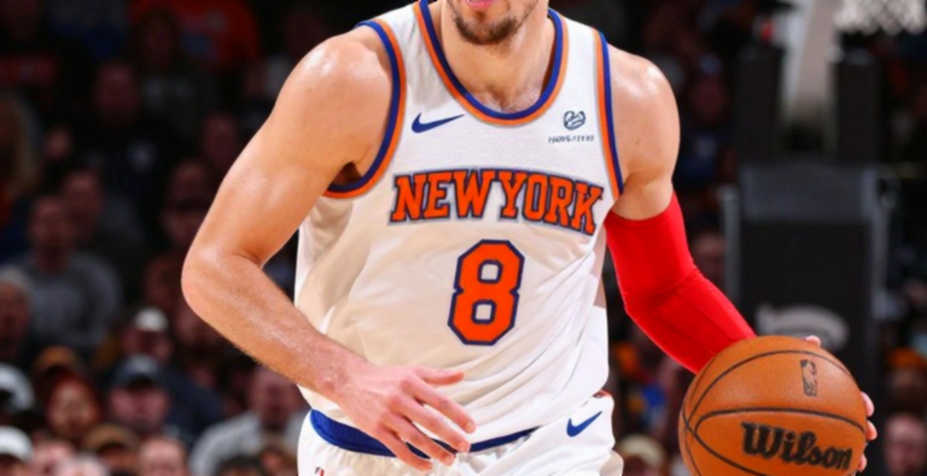
Moses Moody is participating in light on-court activity. He is working his way back from a ruptured left patellar tendon that ended his 2026-26 season in late March. While he is progressing in his recovery, the Golden State Warriors have no concrete timeline for Moody's return. According to NBC Sports Bay Area, they hope he can play sometime in January or February. Moody's absence creates more opportunities for Gui Santos and Yaxel Lendeborg, with the former starting 26 of his final 29 appearances last season.
Jimmy Butler III said on Monday that he has resumed on-court activities in a limited capacity. During Warriors media day, Butler said his testing numbers are "off the charts" and he is ahead of schedule in his recovery from a torn right ACL. However, the Warriors are exercising caution with the veteran wing, as he has not been cleared to go full speed or participate in contact drills. Butler will not be available to help fantasy managers immediately, but he is worth stashing with a late-round pick in standard leagues. His and Moses Moody's absences likely free up additional minutes for lottery pick Yaxel Lendeborg, who the Warriors will need to contribute immediately, whether he starts or comes off the bench.
Memphis Grizzlies GM Zach Kleiman told reporters that center Zach Edey is cleared for full-speed activity. Kleiman said Edey could be ready for the start of the regular season. After having season-ending ankle surgery in March, Edey is right where he needs to be in his rehab, according to Kleiman. It doesn't sound like the 24-year-old center will miss too much time, making Edey a worthwhile selection in the fifth round of fantasy drafts.
Josh Giddey will not be restricted during training camp. Giddey, who underwent right ankle surgery in May, was cleared to play 5-on-5 in early September. He will be able to practice without any restrictions when the Chicago Bulls open training camp on Tuesday. When available, Giddey offered excellent fantasy value last season, especially in assists. With Norman Powell, Caleb Wilson and Nic Claxton among the newcomers, Giddey could crack double digits in that category after averaging a career-best 9.1 assists per game last season.
Two days after acquiring him from the Bulls, the Charlotte Hornets have waived Dillingham. The eighth overall pick in the 2026 draft, the 6-foot-3 guard could not carve out a role in Minnesota before being traded to Chicago in February. Given the number of point guards on Charlotte's roster, Dillingham faced long odds to make the team's Opening Night roster.
Luka Dončić will not have any restrictions when the Lakers open training camp. Because of a hamstring strain suffered in early April, Dončić did not play at all during the postseason. He is good to go now, with the Lakers' cornerstone saying during Media Day that he will not be restricted when the team opens training camp. That is great news for the Lakers and fantasy managers, as Dončić should be an early first-round pick in all drafts. However, given his importance to a team moving on without LeBron James, Dončić may be given a light workload during the preseason.
Donte DiVincenzo said that he expects to play at some point this season. DiVincenzo suffered a ruptured right Achilles tendon during the first round of last season's playoffs. Timberwolves GM Matt Lloyd refused to provide a concrete timeline when asked about the guard's recovery in early September. Still, DiVincenzo made it clear on Monday that he expects to play at some point this season. While we certainly hope that is the case, fantasy managers have no reason to stash him in an IL slot. Just be alert for the day when DiVincenzo is cleared to resume on-court activities. In the meantime, his absence boosts Ayo Dosunmu's fantasy value, as he should be the first guard off the bench.
Micah Peavy will not be available when the Grizzlies open training camp on Tuesday. Acquired from the Pelicans in early September, Peavy recently sprained his ankle. According to Grizzlies GM Zach Kleiman, it will be "a while" before the team gets to see the 2026 second-round pick on the court. Peavy's absence won't affect fantasy basketball, but it does mean one less wing competing for rotation minutes when camp opens.
I list all these items not to build a roundup. I list them to show one thing: within a single week, nearly a dozen league assets were repriced. And amid that wave, the story of a rookie praised by his head coach is the core I want to dig into.
Core: The data behind a compliment
After a solid freshman campaign, Labaron Philon Jr. was one of the most productive guards in college basketball last season. Earning multiple All-America honors, he averaged 22.0 points, 3.5 rebounds, 5.0 assists, 1.2 steals and 2.5 three-pointers, shooting 50.1 percent from the field and 79.8 percent from the foul line. A guard shooting over 50 percent from the field, nearly 40 percent from deep, and adding five assists a game — that is the data of a player who should never have been allowed to slide deep on draft night.
Philon needs to cut down on turnovers, but he flourished in Nate Oats' fast-paced system at Alabama. He is a more than capable shooter from beyond the arc, having shot 39.9 percent from deep as a sophomore. Philon played at an incredibly high pace at Alabama, which may serve him well at the NBA level. The 76ers add another perimeter playmaker who is ready to compete immediately, and learning from Tyrese Maxey should benefit Philon.
Let me place that number beside the injury picture I just painted. In Golden State, Moses Moody's patellar tendon injury and Jimmy Butler's ACL open a minutes window that Yaxel Lendeborg and Gui Santos must fill. In Memphis, Zach Edey's return reshapes the interior. In Chicago, Josh Giddey is fully cleared, promising double-digit assists. In Minnesota, Donte DiVincenzo's absence pushes Ayo Dosunmu up the bench line.
The notable thing is that none of these items was presented as an isolated event. They are links in a market for playing time. Minutes in the NBA are not distributed fairly; they are re-auctioned every time a player goes down. And in that auction, the value of a rookie like Philon depends on whether the team dares to give him a chance.
I know the world before it does. Not because I have an inside source in Philadelphia, but because I have read enough data tables to recognize that the fantasy market always reacts roughly three to six weeks slower than the real market. When Tony Jones posted the line about Nick Nurse, Philon's value in dynasty leagues had not moved. But in my head, the valuation had already changed.
Look at history and this pattern repeats. Many guards slide on draft night because of a few unflattering numbers — modest height, a high turnover rate, an unpopular college system — then become bargains when placed in the right system. What decides it is not talent but team structure. Philadelphia has Tyrese Maxey, a coach willing to experiment, and a backcourt deep enough to shield a rookie still learning the trade.
In the summer game, Philon did not have his best shooting day. But he consistently applied pressure to the Pacers' defense off the dribble, committing two turnovers to go with six assists. Philadelphia's perimeter depth may make it challenging for Philon to earn significant minutes as a rookie, but he is a fun prospect for dynasty league competitors. In his next outing, Philon did not have the most efficient day, but he showcased why he was such an intriguing prospect out of Alabama: he facilitated well and had some flashy buckets, including a clutch three-pointer late that helped seal the win.
This is where I must state plainly what people often overlook when judging rookies. A coach's compliment at practice carries no transfer value. It is not in a contract, does not appear on a payroll, and no one pays for it. But it carries valuation value — because it changes probability. Before that practice, the probability Philon gets a real chance was X. After it, that probability is X plus some margin. For a long-term asset, a small change in probability produces a large change in expected value.
That is the logic a sports operator must grasp. Amateur fantasy managers react to events; professional operators react to probabilities. Every transfer number is a story that has not been told properly. And Philon's story is still in its first chapter, while the market sleeps.
Let me expand the analysis to the commercial dimension I usually care about. A discounted rookie has a specific commercial advantage: he is cheap. Rookie contracts follow the collective bargaining scale, usually four years with the first two guaranteed. For a team weighing the salary cap and the luxury tax, a quality player on a cheap deal is a double asset — helping on the floor and helping the balance sheet. Philadelphia did not just buy a guard; it bought a cheap option in a window where every dollar must earn its keep.
This is why I always say a player's value is not on the court but where money and fame begin to form. A practice in October in Philadelphia may not show on the scoreboard, but it shows in the spreadsheets of the roster-management department. And those who read that spreadsheet before others are the ones who win in dynasty leagues.
Basketball is not only a game; it is a brand running on the hardwood. Every minute Philon plays is a line on a balance sheet no one has recorded yet.
Contrarian: The young-talent price bubble
Now to the part I want to argue. There is a popular belief in fantasy communities that every rookie with upside is worth stashing, that patience always pays. I think that belief is systematically mispriced, and Philon is the perfect case to dissect.
Separate two questions. First, does Philon have enough talent to become a useful NBA player? The answer is almost certainly yes. Second, is Philon an asset worth holding at the current price? That answer depends on league format, and for most players, the answer is no.
In standard redraft leagues, Philon is nearly worthless this season. Philadelphia's backcourt is too deep, and a learning rookie will not get enough minutes to produce steady output. A manager using a roster spot on Philon is paying for a return that cannot be harvested this year. In dynasty leagues, the story flips entirely, because the harvest window spans years. The same player, the same practice, but two opposite valuations — that is the nature of a long-term asset market.
And here is the truly contrarian point: the biggest risk with Philon is not that he lacks talent, but that the market has already priced in belief in him too highly. When a rookie slides and then gets praised, the crowd rushes in and bids the price up. By then, the buyer is no longer buying upside; he is buying excitement. Short-term excitement is always more expensive than long-term value.
I have seen this pattern in soccer, where clubs pay hundreds of millions of euros for players who have not played fifty top-flight matches. The young-talent price bubble is not a soccer phenomenon; it is a law of every sports market when abundant money meets scarce talent supply. The NBA is no exception. Every summer, teams pour money into potential, and every winter, part of it evaporates.
This does not mean ignoring Philon. It means buying him at the right price. If you are in a dynasty league and Philon is still unnoticed, act. If you are in a standard redraft league, let someone else pay for the excitement. The line between investing and speculating lies in whether you buy value or buy a story.
There is one more detail I want to raise, because it relates to how I read the market. Jimmy Butler's and Moses Moody's injuries in Golden State are not just bad news for the team; they are a pricing signal for Yaxel Lendeborg and Gui Santos. Donte DiVincenzo's injury is a pricing signal for Ayo Dosunmu. Larry Nance Jr.'s injury in Indiana is a signal for the Pacers' interior. An operator reads injuries as news; a good operator reads injuries as an investment prospectus.
A crisis does not ask who is ready, but it filters out the winners. Every injury is a table being cleared, and the person sitting closest to the table usually collects the most. For Philon, that table is in Philadelphia, where he is waiting for a crack to open.
I must admit my limits here. Nick Nurse's compliment is one data sample, not a conclusion. A good practice does not guarantee a good season. I am making the call that Philon is a dynasty asset worth holding, and the condition that would make me wrong is this: he fails to improve his turnover rate, fails to adapt to NBA defensive speed, and does not get enough minutes in his first two seasons. If all three happen, his value collapses to that of an ordinary second-rounder. That is the risk I accept, but I do not hide it.
The truth is I learned to curb overconfidence after many years. There was a stretch when I believed I could read every rookie precisely from a single data table. The market taught me that data answers only half the question. The other half lies in the person, in the locker room, in the ability to handle pressure that no spreadsheet measures. Every rookie is a person before he is an asset, and I always remind myself of that.
Takeaway: What to watch
I will follow Philon for at least six months before making a final call, following the habit I built in my early years. But there are three milestones I will mark in my head.
First, his actual minutes in the preseason and the first twenty regular-season games. If he exceeds twelve minutes a game, his value has already changed.
Second, his turnover rate per thirty-six minutes. If he keeps it under two, he has answered the biggest question about himself.
Third, how Nick Nurse uses him in meaningful games. A rookie sent onto the floor in the fourth quarter of a tight game is a rookie who has earned trust, and trust is a currency you cannot print.
For the rest of the league, the coming weeks will continue to be an auction for playing time. Dončić will return without restrictions, but the Lakers will manage him carefully. Giddey will run unrestricted in Chicago. Edey will aim for opening night in Memphis. Butler and Moody remain far off, leaving a gap Golden State must fill with younger names. Every move is a repricing.
The question I leave you is not whether Philon is good. The question is: when the market is still asleep before a newly confirmed talent, at what price do you buy, and to whom do you sell? Whoever answers that three weeks before the crowd will leave the season with a profit. Whoever answers three weeks after the crowd will pay for their own excitement. Sports is not on the court; it is where money and fame begin to form — and in Philadelphia, that process just started in a Tuesday practice no one noticed.